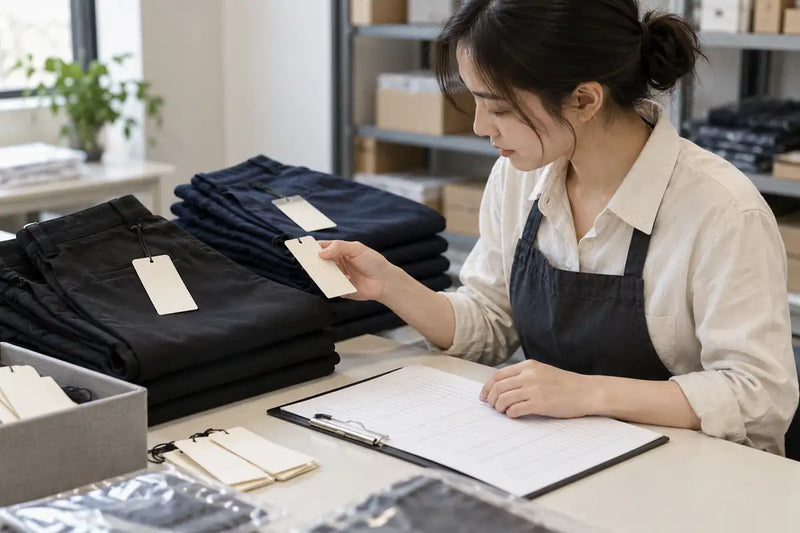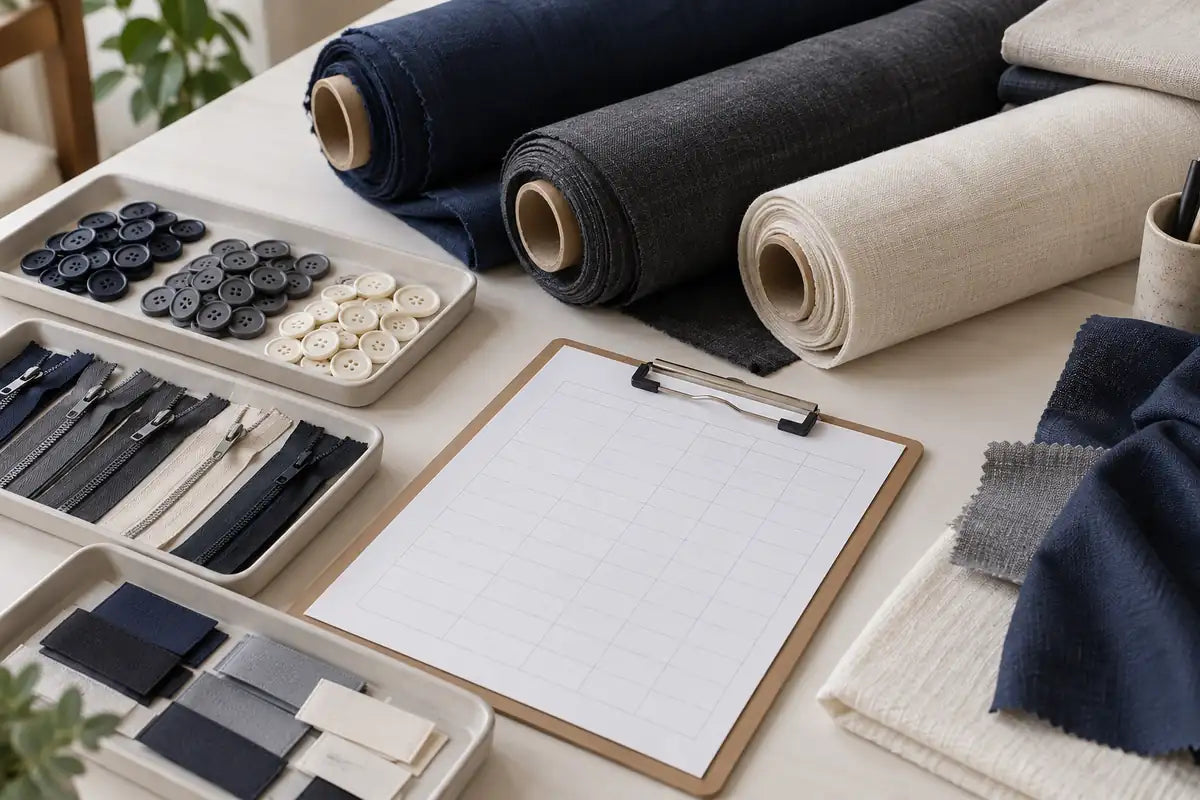
AI-generated editorial illustration of fictional materials and a blank inventory sheet; not a photograph of YJ stock, facilities or a real customer order.
Agree how leftover fabric and custom trims will be handled before the manufacturer buys them. Confirm who owns the balance, what you are paying for, how remaining stock will be counted, and who can authorize its next use. Storage charges and an end date belong in that conversation too.
A few rolls or boxes may be useful for repeat orders. They may also contain short lengths, outdated labels or materials reserved for another style. A stock total alone does not tell you how many garments you can make.
Separate material purchases from garment quantities
Some fabrics are sold by the roll. A small clothing order may use only part of that roll, while the purchase cost still has to be covered. Custom clothing trims can also have supplier minimums that differ from the finished-garment quantity. Ask for the purchasing requirement for each fabric, color and trim version.
For example, KenDor Textiles lists different arrangements for sampling, stock items and custom colors on its order minimums page. Those are that supplier's terms, not a standard MOQ for every manufacturer. Our guide to why pants MOQ varies by fabric explains how material choices affect an order.
Before approving purchases, ask for the estimated requirement, the quantity to be bought and the expected excess. Show sampling and cutting allowances separately where possible. The estimate should be updated after production, because planned consumption and actual consumption may differ. Set a limit above which extra purchases need your approval.
Confirm ownership and charges in writing
Discuss payment and ownership separately. Ask whether the quotation covers only the materials used in the order or the full purchase quantity. Then record who owns any balance, when ownership takes effect and what payment or release conditions apply.
Keep customer-supplied stock, factory-purchased stock and any shared purchases separate in the agreement. Also cover unused materials if the order is canceled or the design changes after buying fabric or trims. Who covers purchases already made, and what happens to stock that no longer fits the brief?
If you have already paid for materials that will be used on a later order, ask how the next quotation will account for them. It should identify any agreed credit or exclusion of previously charged material costs, alongside new materials, production and handling charges. Do not assume a refund, free storage or a lower garment price without a written agreement.
These are commercial planning questions, not a legal contract template. Have ownership, liability and release terms reviewed by a qualified adviser for the relevant jurisdiction.
Ask for a usable balance, not just a stock total
Request a dated leftover-materials statement after the order closes. It should reconcile opening stock and receipts against use, returns, transfers and recorded losses without counting the same movement twice. Ask the factory to investigate any unexplained difference before either side accepts the balance.
GS1's traceability criteria cover material identification, lot references, quantities and links between incoming and outgoing materials. The table below is a practical buyer checklist, not a GS1 certification requirement or a description of YJ's inventory system.
| Record | What to include |
|---|---|
| Material identity | Fabric or trim code, specification, color and artwork revision. |
| Batch and location | Dye lot, roll or box reference, storage site and linked order. |
| Quantity and unit | Measured fabric length and usable width; trim count by size or version. |
| Availability | Separate usable, reserved, rejected and pending-inspection quantities. |
| Record control | Count date, responsible person, movements and supporting photos. |
For fabric inventory, ask how much fabric remains on each roll. Part rolls can contain different lengths, and narrow offcuts may not fit the next cutting plan. Keep meters, yards, kilograms and pieces clearly identified; do not swap units without a documented conversion basis. Record small offcuts and rejected material separately from lengths intended for another order.
For trims, count the versions that the next style actually needs. A box of size labels may have plenty of one size and none of another. Zippers can differ in length or finish even when the total count looks sufficient. Request a recount when the records and the physical stock do not agree.
Set storage terms before leaving materials at the factory
Agree where the stock will be held, how it will be identified and who will check its condition. Write down the holding period, the review date, any storage or handling fees and when those fees start. Confirm who will notify you about damage or shortages, and how responsibility for loss will be handled.
Storage instructions should match the component. YKK Malaysia warns that certain metal zipper parts can corrode depending on storage conditions and that prolonged rubber-band bundling can discolor zippers. Its product FAQ gives examples of why a generic storage rule is not enough. Ask the relevant fabric or trim supplier for its instructions.
Agree the notice period and decision process for stock approaching the end of its holding period. Also decide who to contact if a reorder is delayed or your usual contact leaves the business. "Keep it for our next order" leaves the holding period open unless you also agree a date.
Recheck leftover materials before a repeat order
Before allocating stored fabric to a repeat order, have the manufacturer inspect it and check its specification, usable width and remaining lengths against the new cutting plan. If new fabric will supplement an old balance, compare the lots for shade and confirm any washing or shrinkage checks needed for the style.
Check trims against the current bill of materials and approved artwork. Old care labels, size labels or hangtags may no longer match the garment, packaging or market requirements. The logo artwork checklist for custom clothing can help buyers identify the correct version before reuse.
The next order still needs a complete set of materials. Other components may still need to be bought, and the available size or color mix may not match the planned quantity. Confirm a revised quotation and production schedule after the manufacturer checks the complete material list. Leftovers do not automatically remove garment MOQ or guarantee faster delivery.
Agree who can release, reuse or dispose of the balance
Specify which named person can approve use on another order, transfer to another factory, return to your warehouse or disposal. For a transfer, agree the packing list, shipping cost and receiving check. Record the material references and quantities leaving the factory, then confirm what the recipient received.
Give the factory written handling instructions for branded labels, logo buttons and printed packaging. Agree that the manufacturer must obtain your written approval before using them for a different customer, selling them or passing them to another party. Include subcontractors where relevant. These controls belong alongside your design confidentiality arrangements.
If stock is obsolete, agree whether it will be returned, recycled or destroyed, who pays and what record will confirm completion. Check the proposed method before approving it, especially for materials carrying your brand name. Do not describe stock as recycled just because someone collected it. Keep the approval, date, quantities and available evidence with the order record.
Bring the material plan into the first quotation
Send YJ your style brief, order quantity, fabric requirements and trim details when you request a quote. Mention any planned repeat orders. If you already have leftover materials, include their specifications and a current stock statement so YJ can review them for the proposed style. Discuss purchase, storage and release terms for that project before authorizing material purchases.
Frequently asked questions
Who owns leftover fabric after clothing production?
Confirm ownership in the purchase agreement rather than inferring it from where the stock sits or who arranged the purchase. Record whether the balance belongs to the brand, the manufacturer or both, when that takes effect and any payment or release conditions.
Will a clothing manufacturer store leftover materials for free?
Ask first. Confirm whether storage is available, the holding period, when any fees begin and what happens at the end of the holding period. Agree who will check the stock, report damage and arrange collection.
Can leftover fabric and custom trims reduce my next order's cost or MOQ?
They may reduce new material purchases if they are usable and match the next order. They do not automatically lower the garment MOQ or total price. Ask for a quotation that accounts for previously paid materials, missing components, production work and any agreed handling or storage charges.
What should a leftover-materials stock report include?
Request material codes and specifications, lot or roll references, location, quantities with units, and a dated condition check. Separate stock available for use from reserved, rejected or uninspected material. For trims, split the count by size, color and artwork version.
What should happen to unused branded labels and custom trims?
Agree who can approve reuse, transfer, return or disposal in writing. Identify the permitted orders and recipients, and require approval before another party uses branded materials. For disposal, record the method, quantities, costs and evidence agreed by both sides.