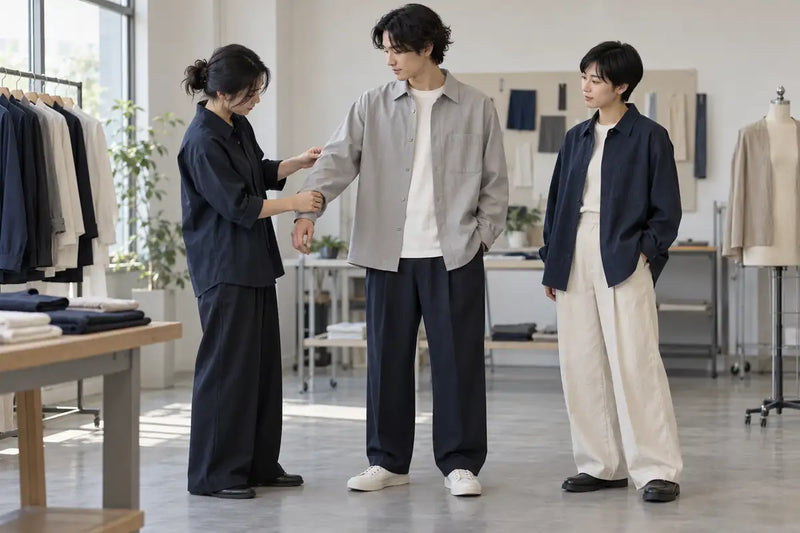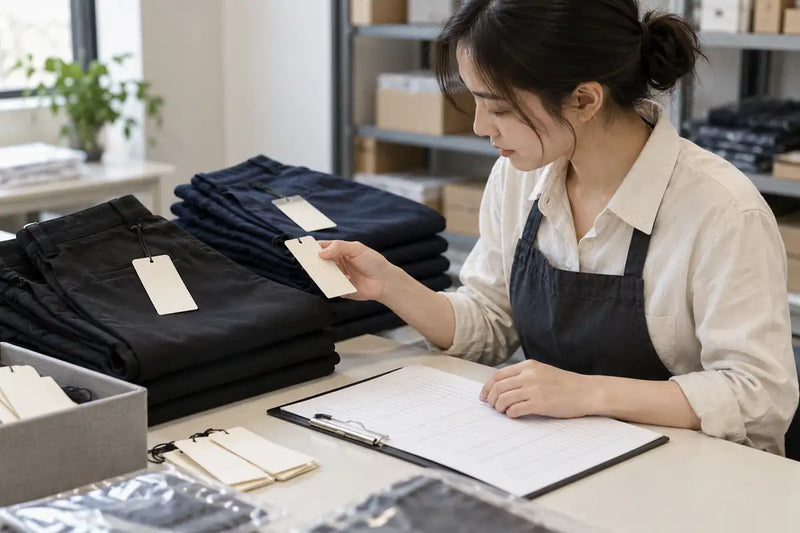
AI-generated editorial illustration with fictional people and props; not a photograph of YJ staff, a customer project or evidence of confidentiality or security procedures.
Design confidentiality in clothing manufacturing starts with agreeing who can access your materials and what they may use them for. A sample photo sent for fit approval needs an agreed audience. If the same photo is later proposed for a website or sales presentation, treat that as a separate permission request.
These are practical points for a buyer and supplier to discuss, not a statement of any factory's existing policy. They are general information, not legal advice. Have a qualified adviser review confidentiality and intellectual property terms for the jurisdictions involved.
Identify the material you need to keep confidential
List the files and physical items before sending them. For an unreleased clothing range, the list might include sketches, tech packs, editable patterns, artwork, sample photos, fitting videos and the garments themselves. Launch dates, order quantities and costing information may also need restricted handling.
Confidentiality and legal trade-secret status are not identical. WIPO's trade-secret guidance describes secrecy, commercial value arising from that secrecy and reasonable protective steps as general requirements. Do not assume every garment detail qualifies simply because a file says "confidential."
At the inquiry stage, a less detailed brief may be enough to check whether a supplier can consider the job. Explain what you are withholding and why. Before development starts, agree how the people doing the work will receive the complete information they need. They should not have to guess at missing measurements or hidden construction details.
Agree the purpose of a clothing manufacturer NDA
A clothing manufacturer NDA should match the work being discussed. Is the recipient evaluating a quotation, developing a sample or manufacturing an approved order? The UK Intellectual Property Office's NDA guidance stresses defining the permitted purpose and considering necessary disclosures to others. Its guidance is not a ready-made contract for every country.
Before disclosing sensitive material, have the parties settle the appropriate agreement. Check the legal entities and signing authority, the information covered, permitted uses and recipients, duration and how a concern will be reported. Ask your adviser about applicable law, dispute arrangements and any wording needed for physical samples or oral discussions.
Settle design ownership and permitted use as well. Who supplies the original artwork? Who owns a newly developed pattern, and what files must be delivered? A confidentiality promise should not be treated as the answer to those separate questions. The UK government's guidance on IP in agreements distinguishes ownership, access, use and confidentiality. Confirm the arrangements for your project rather than assuming that a sample fee settles them.
Separate working photos from marketing photos
Sample photos can show a fit issue, a seam finish or the position of a logo. Agree who may take those photos, where they will be sent and who may see them. Include video calls, screen recordings and personal phones in the discussion.
| Material or use | Permission to clarify |
|---|---|
| Fit or quality-control photos | Which project recipients may see them and whether they may forward them |
| Artwork sent to a printer or embroiderer | The named task, files needed and conditions for further sharing |
| A sample shown to another buyer or factory visitor | Whether display or photography is allowed at all |
| Website, marketplace, social post or trade-show display | Separate written approval of the asset, use and timing |
Consider a pocket-correction photo: the close-up might also show an unreleased label or another style hanging behind it. Check the whole frame before sending it. Crop out unrelated designs and documents, and keep useful measurement evidence visible. Removing a logo does not necessarily make a distinctive garment unrecognizable.
Record photo IDs beside the relevant sample fit comments. When you approve the pocket correction, name that decision. Keep marketing approval in a separate record.
Confirm sharing with subcontractors and service providers
Find out who outside the main factory needs the material. A specialist may need artwork for embroidery, a fabric swatch for matching or a garment for testing. Agree which providers may receive material, what each needs and what happens if a provider changes.
WIPO's discussion of trade-secret safeguards across the supply chain recommends practical procedures alongside agreements. For a print task, that might mean sending the approved artwork and placement sheet rather than the entire collection folder. Our logo artwork checklist helps identify the production details to include.
Ask how the agreed restrictions reach the people handling those files, who checks compliance and whether further sharing needs approval. Include file-transfer services, cloud storage and AI image or translation tools in the agreed list of permitted services. Treat an upload to a new service as another disclosure decision, even if the intention is only to improve a sample photo.
Track physical samples as well as digital files
Give each sample an ID and record who holds it. Before shipping, confirm whether the recipient may unpick, cut, wash or otherwise alter it. Our guide to working from a reference sample covers those development questions.
Ask where the sample will be kept and who can inspect it, including whether visitors will be able to see it. Include rejected samples, trial prints and branded fabric offcuts in the discussion. Decide whether the supplier may keep them as production references, display them in a showroom or reuse them.
Tech pack confidentiality also needs a record of the digital files. WIPO's trade-secret management guide covers document tracking and access controls. Use identifiable revisions and named project recipients. Where available, use restricted links and review access as people leave the project. A watermark can identify a file or its intended recipient, but it cannot prevent someone from copying or photographing it.
Make any public-sharing approval specific
If you are willing to allow a factory case study or portfolio image, review the exact image and caption first. The approval record should name the channel and date, with any limits on brand names, tags, customer details or reuse. Check permission from relevant rights holders and people shown where needed. "Looks good" in a sampling conversation does not record which of these uses you agreed to.
Review the restrictions when the product launches. Do not assume that launch makes the whole project folder available for sharing. Public product images and an unpublished cost sheet are different materials. State whether publication permission covers only the selected image or any further use, and agree a contact for later changes or removal requests.
Plan for the end of the project and accidental sharing
Agree which samples and files will be returned, retained or destroyed, by whom and when. If a reference sample or record must be retained for an agreed quality purpose or legal requirement, document that exception and restrict its use. WIPO discusses return, destruction and legal retention in its guidance on collaborative projects. An agreement does not eliminate the risk of misuse. Ask how copies held by subcontractors and backups fit into the plan. Do not promise that deleting a shared link removes every downloaded copy.
If a photo reaches an unintended recipient, pause further sharing and notify the agreed contacts. Record what was sent, when, to whom and through which channel. Preserve evidence while arranging removal of unauthorized access or public copies where possible. Seek qualified advice when assessing legal consequences; do not assume either that deleting the post resolves everything or that every incident has the same legal effect.
Raise confidentiality before sending the full brief
For a YJ inquiry, start with the garment category, intended quantities and the development help you need. If the project is sensitive, discuss your project and confidentiality requirements before sending unreleased artwork or a complete tech pack. Request confirmation of the handling arrangements and any agreement for your specific project.
Keep the handling agreement with the sample approvals so the team can check permitted uses, find restrictions on sharing and contact the person who can authorize a change.
Frequently asked questions
Should I arrange an NDA before sending a tech pack?
If the tech pack contains material you need kept confidential, settle the appropriate confidentiality arrangement before disclosing it. You can begin with a limited, non-sensitive inquiry. Have a qualified adviser check the agreement rather than relying on the file name or a casual assurance.
Can a manufacturer take photos of my samples for quality control?
Agree who may take the photos and who needs to see them for the project. Specify the sharing channel and any forwarding restrictions. Keep that permission separate from using the images for marketing, a showroom or another buyer's inquiry.
Does hiding my logo make a sample safe to share?
Not necessarily. A distinctive print, silhouette, label detail or background document can still reveal the project. Review the whole image and its intended use, and obtain the agreed permission instead of treating logo removal as sufficient.
Can a supplier send my design to an outside embroidery workshop?
Confirm the arrangement before the files leave the factory. Name the provider and task, identify the files needed, and agree confidentiality and onward-sharing restrictions. An embroidery workshop may need the artwork and placement sheet without needing the rest of the collection.
Does paying for a sample mean I own the pattern files?
Do not assume that payment alone settles ownership or file delivery. Agree rights in the original inputs and newly developed work, the permitted uses and the files to be supplied. Those questions need explicit project terms and appropriate legal review.