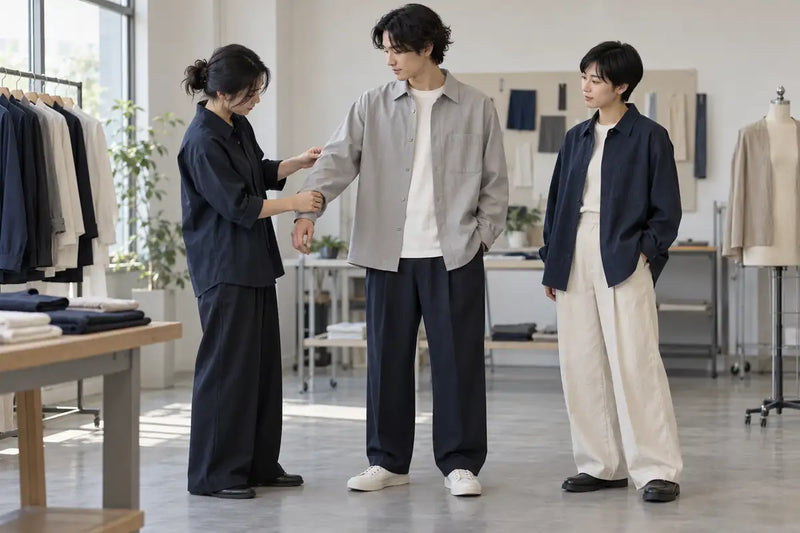
Images in this article are AI-generated illustrations, not photographs of YJ products or facilities.
Before starting linen pants manufacturing, approve the exact fabric and finish, the fit before and after the intended care process, seam performance, color, and all garment components. Record those decisions in the tech pack and approve a pre-production sample made with the agreed bulk materials.
A pair of linen pants may look right on a hanger, then feel too short after the first wash. Pale pocket bags can show through the front; a seat seam can open under tension. Use the finished garment to check opacity and seams, and measure it again after the agreed care process.
Specify the fabric beyond the word linen
Write the exact fiber composition and percentages into the specification. A linen-look description does not establish linen content, and a fabric's texture cannot verify its blend. Keep the supplier's fabric reference with the approved swatch and request appropriate composition documentation or testing where needed.
For both pure linen and linen blend pants, the fabric specification should include:
- Fiber percentages, fabric article number, and supplier reference
- Weave, target weight in grams per square meter (GSM), and agreed tolerance
- Usable width, excluding any edge area the cutting plan cannot use
- Color reference and the required dyeing or garment-dyeing route
- Finishing details, such as softening or prewashing, with a physical handle reference
Two swatches of similar weight can produce a different fit and drape in the same trouser pattern. Approve the actual article and finish rather than allowing a substitute based only on composition and GSM. If the supplier changes either, ask which fit and performance checks need to be repeated.
Check opacity on the garment
Check light-colored pants as a finished garment, not only as a loose swatch held in your hand. Review the garment on a wearer or suitable fit form under agreed lighting. Check the front and back, including the seat and upper thigh, and assess whether pocket bags or seam allowances are visible.
If the design needs a lining, approve its coverage, color, attachment, and effect on fit. A lining that solves show-through may change how the pants hang or feel in wear. Include it in the sample review rather than adding it after fit approval.
There is no single best GSM for every linen trouser. Use fabric weight alongside weave, color, finish, intended season, and the garment's opacity and drape requirements. Approve the result in the sample, not just a number in the fabric quote.
Measure linen fabric shrinkage and finished garment changes
Confirm how the finished product is intended to be cared for before setting the wash test plan. Record the method, wash and dry conditions, number of cycles, measurement procedure, and acceptance limits. Without those details, you cannot tell whether a shrinkage result reflects the care instructions you plan to give customers.
Fabric and garment reports answer different questions. AATCC TM135 measures fabric dimensional changes after home laundering. AATCC TM150 measures garment dimensional changes after home laundering. Both offer different laundering conditions; neither provides a universal acceptable shrinkage percentage for linen pants. TM150 may not suit certain stretch garments, so the lab should confirm method suitability for the actual product and intended care.
Check lengthwise and widthwise fabric change, then measure the finished pants before and after the agreed care cycles. Record waist, hip, rise, inseam, and other fit-critical points using the same measurement instructions. A fabric result alone does not confirm the finished waistband or lined garment will meet the size specification.
Use results from material representative of the bulk finish when deciding whether the pattern needs compensation. A prewashed description is not a promise of zero further change. Avoid adding a standard percentage to every pattern piece without checking the fabric, construction, and required finished measurements.

Approve fit through movement and across sizes
Review waist position, seat ease, thigh room, rise, and hem width in the intended fabric. Ask the fit model to sit, walk, and bend so you can observe pocket gaping, waistband pressure, or pulling at seams. This fit review does not replace laboratory performance testing.
For an elastic waistband, define how to measure the waist relaxed and extended, including the agreed extension procedure. For a fixed waistband, specify the measurement with the closure fastened. State whether each measurement target applies before care, after care, or both.
A single approved size does not confirm the whole size range. Agree on the size-set samples needed to check grading, especially around the seat, rise, and thigh. Keep comments with the revised measurements. The factory should not have to decide which chart belongs to the latest pattern.
Separate seam slippage from seam strength
When a seam opens, check what moved or broke. Fabric yarns can slip at a seam while the sewing thread remains intact. Stronger thread alone may not solve that problem.
ISO 13936-2 addresses yarn slippage at sewn seams in woven fabrics using a fixed-load method. ISO 13935-1 addresses the maximum force to seam rupture using a strip method. These evaluate different aspects of seam performance. The latter is limited to straight seams, so do not assume it directly tests a curved trouser crotch seam.
Ask the lab and supplier to select suitable methods and specimens for the fabric and construction, with acceptance criteria agreed before testing. During garment review, pay attention to the seat, crotch, pocket openings, and other areas under strain. Approve seam type, allowance, stitch settings, thread, and any reinforcement through sample evaluation rather than prescribing the same solution for every linen fabric.
Agree on color, texture, and post-wash appearance
Keep an approved physical color reference and agree on the lighting used for shade decisions. For bulk fabric, define how the supplier will check shade differences between rolls and avoid mismatched panels within a garment. If the pants are garment dyed, assess the final dyed sample with its actual thread and trims.
Agree on the appearance of slubs and other yarn irregularities using swatches or marked samples. An intentional texture does not make every thick spot, thin patch, hole, or stain acceptable. Record visual limits with marked defect examples so the inspector can judge the fabric against the same references you approved.
Review appearance after the agreed care process, including seam puckering, leg twist, surface change, and pressing marks. Decide which colorfastness checks the product needs, such as washing and wet or dry rubbing, and set the test methods and acceptance criteria. Photographs can document comments, but use the agreed physical reference for final color approval.
Test the waistband, pockets, and trims together
Include the actual zipper, buttons, elastic, pocketing, lining, interlining, labels, and thread in the approval sample. Check closure operation, waistband shape, pocket access, and attachment quality before and after the intended care process.
Pay particular attention to components that may respond differently from the shell fabric. Look for a rippled waistband, a puckered pocket opening, or lining that pulls on the outer layer after care. Confirm care-label wording against the finished product and the evaluation results, including all components.

Confirm materials and quantities before booking bulk work
For linen pants production, ask whether the approved fabric is available in the required quantity and colors, or whether it needs a new mill order. Record fabric minimums by article and color separately from the factory's garment minimum. A sample cut from available fabric does not reserve that fabric for bulk.
Before authorizing material purchases, settle the size breakdown, who can place those purchases, sample deadlines, and the conditions for the bulk start date. If the order leaves unused fabric, confirm who pays for it and what happens to it. The low MOQ clothing manufacturing cost guide explains how material commitments and smaller batches can affect the quote.
Use a pre-production sample to approve the finished specification
Make the pre-production sample with the intended bulk fabric, trims, construction, and final wash or finish. If a component is unavailable, document the substitute and the approval it cannot yet support. A sample made with temporary pocketing, for example, cannot settle the final pocket's show-through or care performance.
Confirm the required sample stages through the sampling and production process. Keep a dated approval sample and one current tech pack with the measurement chart, construction details, bill of materials, and resolved comments. Agree that bulk cutting will wait for the named buyer approver's release.
Keep the approval records together so both parties can identify what they have authorized:
| Approval area | Evidence to keep |
|---|---|
| Fabric and appearance | Identified swatches, composition record, finish specification, color reference, and visual defect examples |
| Fit and care performance | Approved measurements, size-set comments, and before-and-after care results with test conditions and limits |
| Seams and components | Construction specification, agreed performance results, and approval of actual trims and pocketing |
| Production release | Dated pre-production sample approval, current tech pack, confirmed materials, quantities, and named authorization |
Set the linen pants quality control plan before work starts. Agree on incoming material checks, in-process checks, final inspection, defect definitions, and sampling or acceptance rules appropriate to the order. Use the quality control requirements as a starting point for that discussion. Also agree how the supplier will report deviations and obtain approval for corrections or substitutions.
The clothing manufacturing process guide explains where these checks sit within cutting, sewing, finishing, and packing.
What to send with your linen pants inquiry
Send the tech pack or reference garment, fabric article or composition requirement, intended care, target colors, quantities by size, and required delivery date. Include any unresolved questions about opacity, shrinkage, fit, or seams in the project inquiry form. Ask which samples and test results are needed before you can authorize bulk cutting.
Frequently asked questions
Should linen pants use pure linen or a linen blend?
Start with the fit, drape, appearance, care, and price requirements. Confirm exact fiber percentages and evaluate the actual finished fabric in a garment sample. A blend name alone does not tell you how the pants will perform.
What fabric weight is best for linen pants?
There is no single GSM that suits every design. Review weight together with weave, color, finish, opacity, season, and silhouette. Check the actual garment for show-through and drape, especially in pale colors.
What is an acceptable shrinkage rate for linen pants?
Set limits for the specific fabric and finished garment under defined care conditions. Record the test method, washing and drying settings, cycle count, and measurement points. Agree on that full acceptance specification with the supplier before approving a shrinkage result.
Do prewashed linen pants still need wash testing?
Yes, if the intended consumer care includes washing. Prewashing does not establish that the finished pants will stay within the agreed dimensions or appearance limits during later care. Evaluate a representative garment with its actual trims and finish under the agreed test conditions.
Why can a linen trouser seam open without broken thread?
The fabric yarns may have moved at the seam, which is seam slippage. Ask the supplier to investigate the fabric and seam construction and agree on suitable testing. Increasing thread strength alone may not address yarn movement.
Can an earlier sample approve a new linen fabric?
Not automatically. A new fabric article, blend, finish, or component can affect fit, care performance, or appearance. Identify which existing approvals remain applicable and which sample or test checks must be repeated before the new material goes into bulk production.