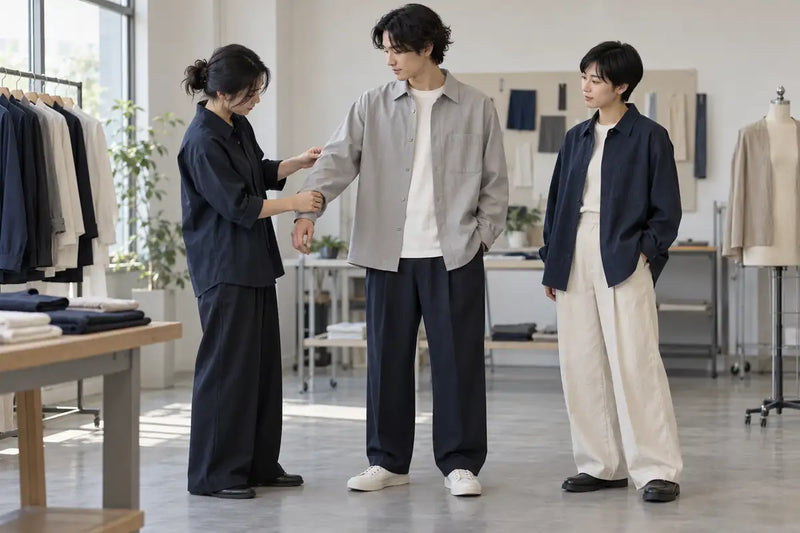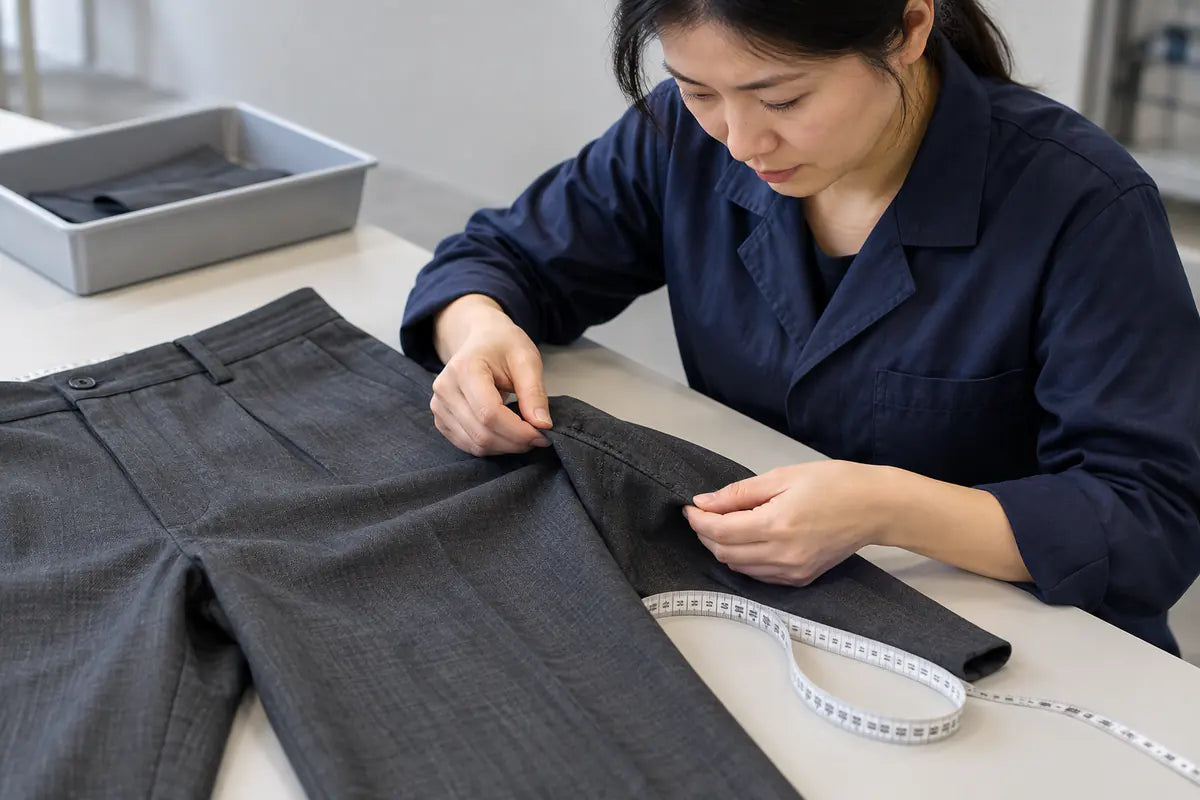
AI-generated editorial illustration; not a photograph of YJ staff, facilities or a customer order.
Garment rework is corrective work on a piece that does not meet the agreed requirements. At YJ, unexpected shrinkage can cause measurement differences that need rework and discussion with the customer. For a slight workmanship imperfection, we discuss the issue with the customer. If they accept it, we do not rework it. If they do not, we arrange further treatment.
We also address thread-related problems during final garment inspection. Our inspection flow returns reworked pieces to a checking stage before they can continue along the packing route. What can be corrected depends on the problem. Some garments cannot be restored.
When shrinkage affects garment measurements
Sometimes unexpected shrinkage leaves garments with size differences. We address those differences through rework and communicate with the customer. The correction depends on the fabric and finished style.
For a pants order, identify where the measurement is wrong. Compare the waist, inseam or other affected measurement with the agreed specification and tolerance. Use the same points of measure and garment condition when comparing results. A measurement before a production treatment and one after laundering answer different questions.
Fabric and garment tests also have different scopes. AATCC's TM135 covers dimensional changes in fabrics after home laundering, while TM150 addresses garments. The appropriate method needs confirmation for the garment; TM150 may not suit some stretch garments. These references explain test scopes, not YJ's testing practice. Our fabric shrinkage test guide explains the information to agree before testing.
When we discuss workmanship defects with the customer
Some workmanship imperfections are small enough to discuss with the customer before deciding on rework. We explain the issue and ask whether it is acceptable. If the customer accepts that specific imperfection, we leave it without rework. If they do not accept it, we arrange additional treatment.
An acceptance decision applies to the issue discussed, not to unrelated defects or future orders. Keep the decision with a description or photo of the detail, and identify which goods the approval covers.
Consider what the defect means in use. A small appearance flaw is different from a seam that is coming apart, even if both look minor in a photo.
Thread problems need the right correction
Thread-related issues are among the problems we address at final inspection. The correction needs to match the finding: an excess thread end and a loose or opening seam are not the same problem.
When rechecking the garment, look at the stitching as well as the visible thread. Removing a thread end does not establish that an opening seam has been repaired. Where a seam has been opened or resewn, the review should include the surrounding fabric and the garment's shape. These are practical review points to agree for the order, not a fixed repair recipe for every construction.
How garments return for rework and inspection
Our final inspection process includes checks before and after ironing, followed by another inspection after tagging and labeling. The return routes are:
- Pieces that fail the first final inspection go into a red-tag holding area and then to the rework workshop. After rework, they return to the first inspection.
- Pieces that pass the first check move to ironing and a second final inspection.
- Pieces that fail the second check go into a red-tag holding area. They can return to the workshop for rework, and corrected pieces come back for inspection.
- Pieces that pass the second check move to tagging and labeling, then to re-inspection. A failure here sends them back to the second final inspection.
- Pieces that pass re-inspection continue to packaging and shipment. The process has a separate storage route for pieces that cannot be reworked.
These are the inspection stages and return routes. For your project, agree on the number of pieces checked, the inspection method and who can release the goods. The sequence alone does not establish 100% inspection or independent third-party inspection.
Checking again after ironing has a practical purpose. Thread manufacturer AMANN's seam-appearance guidance notes that puckering can appear during pressing or after a rest period, and that ironing can leave seam marks on fine fabrics. A check before pressing cannot show every change that may appear afterward.
What to confirm when reworked garments come back
For garment re-inspection, agree what needs checking before accepting the result. Cover the original problem and the parts affected by the correction:
- The affected measurement compared with the agreed specification, using the same measurement method and relevant garment condition.
- The corrected seam or workmanship detail, along with the surrounding fabric.
- Any change to fit, shape or appearance caused by the work.
- The garments or batch covered by the rework and the outcome of the recheck.
- Any remaining imperfection that still needs a customer decision.
Use these review points to agree a plan for your order. Confirm the test plan and any required report format for your order. If you need a particular report, inspection coverage or separate inspection provider, include that in the quality-control requirements for your order.
When a garment cannot be reworked
Pieces that cannot be reworked take a separate route to secondary-product storage, outside the normal packing and shipment route. Keeping them in that area is not approval to sell them or include them in the customer's shipment.
If the remaining goods or proposed treatment change the order, discuss the next step with the supplier. Confirm the accepted quantity and any effect on timing or cost. Rework has no standard duration for every problem, and replacement should not be assumed.
Agree on defect handling before bulk production
Before a new order starts, give the supplier a clear reference for what you will accept. Agree on:
- The approved sample and measurement specification, including tolerances and the condition in which measurements are taken.
- Workmanship requirements and any appearance details that need particular attention.
- Who can approve an exception and how that decision will be recorded.
- The recheck scope, who releases the goods and what happens if correction is unsuccessful.
- How changes to timing, quantity or cost will be discussed.
The clothing manufacturing process guide puts these inspection stages in the wider production sequence. Keep the defect-handling agreement with the same specification used for sample approval.
For a YJ order, send your garment brief and quality requirements. Include the sample references and any measurement or workmanship concerns you already know about so we can discuss them before production.
Frequently asked questions
What is garment rework?
Garment rework is corrective work on a piece that does not meet the agreed requirements. At YJ, this can mean addressing a size difference caused by unexpected shrinkage or treating a workmanship problem. Reworked pieces return to the inspection process.
Does YJ rework every small workmanship imperfection?
No. We discuss slight workmanship imperfections with the customer. If the customer accepts the specific issue, we do not rework it. If they do not accept it, we arrange further treatment. That decision should not be extended to other defects or orders.
Can rework always fix a shrinkage-related size difference?
Not every size difference can be corrected. We address shrinkage-related measurement issues through rework and customer communication, but what can be done depends on the garment. Our process has a separate route for pieces that cannot be reworked.
Are garments inspected again after rework?
Yes. Our final inspection flow returns reworked pieces to an inspection stage. It includes a check after ironing and re-inspection after tagging and labeling before the passing route continues to packaging. Agree the inspection coverage and release responsibility for your order.
How long does garment rework take?
There is no fixed turnaround for every order. Ask for an assessment based on the defect, affected quantity, proposed treatment and recheck requirements. Confirm any change to shipment timing instead of assuming the correction fits the original schedule.