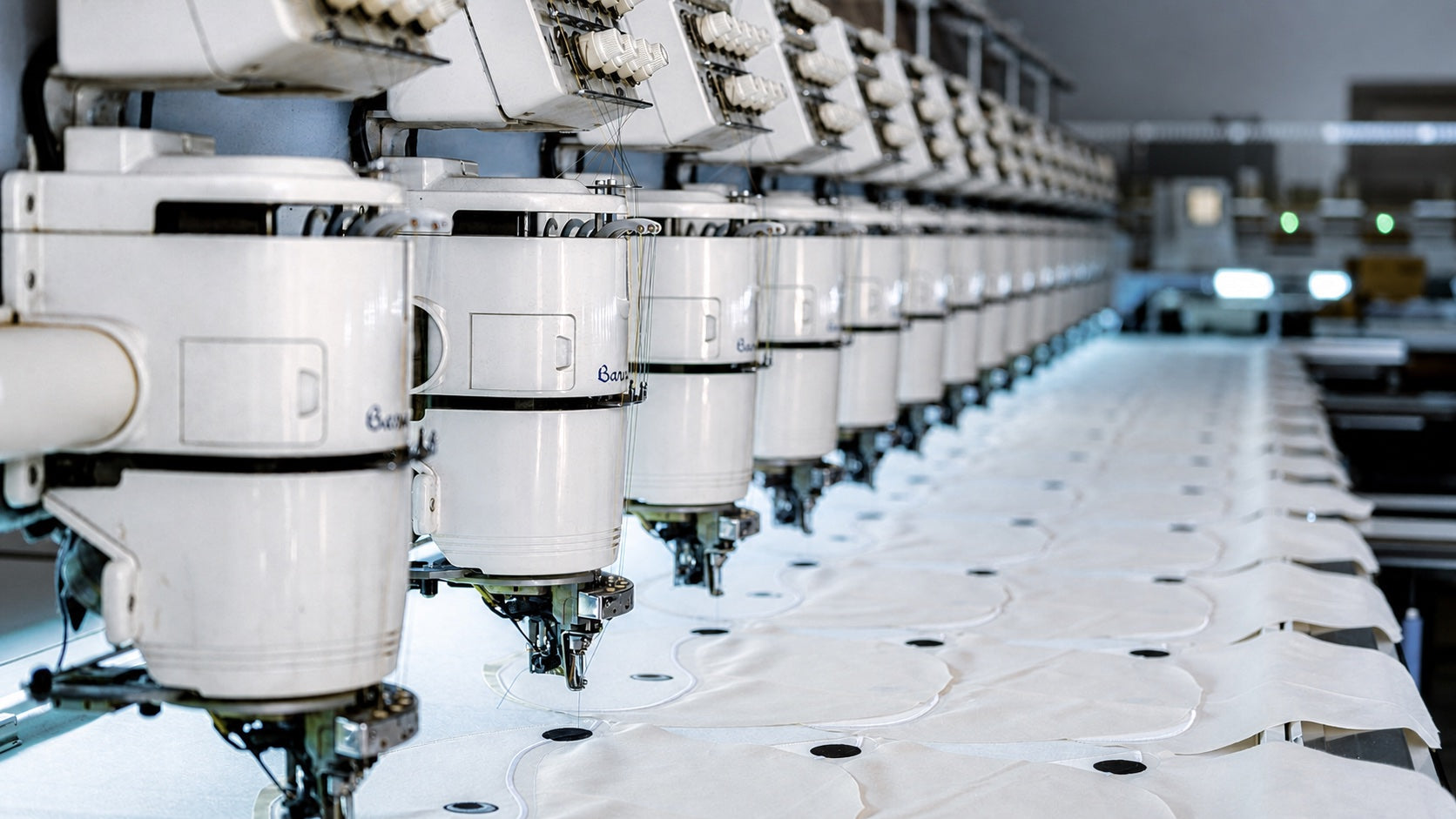
For fashion brands, choosing a manufacturing country is no longer a simple comparison of unit prices. The real question is whether a supply chain can turn an idea into a reliable product, respond when plans change, and scale without losing control of quality.
This is where the China apparel supply chain continues to stand out. Its advantage comes from the connection between material suppliers, product developers, specialized factories, finishing partners, packaging companies, testing services, and export logistics. When those capabilities work together, brands can reduce development friction and make decisions faster.
The scale is still significant. According to China’s National Bureau of Statistics, the country exported RMB 1.0205 trillion in textile yarns, fabrics, and related products in 2025, plus RMB 1.0822 trillion in clothing and clothing accessories. Scale alone does not guarantee a successful order, but it shows the depth of the industrial base behind apparel manufacturing in China. View the official 2025 statistical communiqué.
1. A connected, end-to-end manufacturing ecosystem
An apparel order involves far more than cutting and sewing. A brand may need yarn or greige fabric, dyeing, printing, embroidery, labels, elastic, zippers, buttons, wash treatments, testing, packaging, and freight coordination. In a fragmented supply chain, every additional supplier creates another handoff, lead time, and source of risk.
China’s strongest apparel regions bring many of these capabilities into concentrated industrial clusters. A manufacturer can often work with nearby fabric markets, trim suppliers, pattern rooms, dye houses, embroidery facilities, printers, and packaging vendors. That proximity makes it easier to compare options, solve material problems, and replace a component when the original choice is unavailable.
For buyers, the benefit is not simply more suppliers. It is the ability to coordinate more of the product journey through one sourcing network.
2. Faster product development and sampling
Speed matters before bulk production begins. A slow sample cycle can delay photography, wholesale appointments, crowdfunding, or a seasonal launch.
An experienced clothing manufacturer in China can connect pattern making, sample sewing, fabric sourcing, and trim development within a short feedback loop. When a fit sample needs adjustment, the pattern team can review the issue, source an alternative fabric, and prepare the next version without sending the project through several disconnected partners.
This is especially useful for brands developing:
- Private-label collections with custom fit and details
- Products that combine multiple fabrics or trims
- Garments requiring printing, embroidery, washing, or bonding
- Frequent color or material updates
- Small test runs before a larger launch
Fast development does not mean skipping approval steps. It means reducing the idle time between them. See the main stages on our sampling and production process page.

3. Flexible order structures with room to scale
China is often associated with very large production runs, but the market is much broader than that. Depending on the product, material, and level of customization, brands can find workshops for development quantities, factories for medium-volume private-label orders, and large facilities for repeat programs.
The important point is not to chase the lowest advertised minimum order quantity. A realistic MOQ depends on the fabric mill minimum, dye-lot size, custom trim requirements, print setup, and production efficiency. A good manufacturing partner explains which part of the product is driving the MOQ and offers practical alternatives.
For example, a brand may lower initial risk by using an in-stock fabric, standardizing a zipper across several styles, or launching fewer colors. Once demand is proven, the same supply network can support custom materials and larger production runs.
That combination—testing carefully, then scaling quickly—is one of the most commercially useful advantages of garment sourcing in China.
4. Broad category and process expertise
Different garments require different skills and machinery. A factory that makes basic jersey T-shirts may not be the right partner for tailored outerwear, seamless activewear, down jackets, or bonded performance products.
China’s manufacturing base includes specialists across a wide range of categories, including:
- Cut-and-sew knits and woven garments
- Activewear and performance apparel
- Sweaters and fully fashioned knitwear
- Denim and garment washing
- Jackets, outerwear, and insulated products
- Workwear and uniforms
- Lingerie and seamless products
- Embroidery, screen printing, digital printing, and heat transfer
This specialization gives product teams more options when a collection includes several construction methods. It also makes it easier to match each style with the right production capability instead of forcing every product into one factory. Review the currently verified scope on our apparel capabilities page.
5. Practical material sourcing and customization
Fabric selection often determines the cost, hand feel, fit, durability, and lead time of a garment. China’s textile network offers access to natural fibers, synthetics, blends, recycled options, coated materials, performance finishes, and a deep market of ready-made fabrics.
For an emerging brand, stocked fabrics can reduce development time and initial commitments. For an established program, mills may be able to develop custom weight, color, stretch, finish, or functional performance, subject to technical feasibility and mill minimums.
The same flexibility applies to trims and branding. Woven labels, care labels, hangtags, buttons, drawcords, packaging, and other components can be coordinated as part of one product specification. This helps a private-label clothing manufacturer in China deliver a more complete product rather than an unfinished garment that requires additional work after arrival.
6. Quality control can be built into the process
Quality is not guaranteed by a country of origin. It comes from clear specifications, controlled approvals, capable production, and consistent inspection.
A reliable China clothing supply chain can support quality checks at several stages:
- Material and color approval before cutting
- Fit and construction approval during sampling
- Pre-production confirmation of all components
- In-line checks while garments are being sewn
- Measurement, workmanship, and appearance inspection after finishing
- Final random inspection before shipment
The strongest results come when the buyer and manufacturer agree on measurable standards before production. These may include a measurement tolerance, approved color standard, seam specification, test requirement, packaging method, and an acceptable quality limit for inspection.
Ask potential suppliers how they record defects, manage corrective actions, control needles or sharp tools, and separate approved goods from rejected pieces. Their answers reveal more than a generic promise of high quality. Our quality-control overview explains the checkpoints that can be confirmed for an individual project.

7. Export experience and established logistics options
Apparel manufacturing is only complete when the correct goods reach the correct destination with accurate documents.
China’s major manufacturing regions are connected to international ports, airports, freight forwarders, consolidation warehouses, and courier networks. Buyers can compare air freight, sea freight, rail routes, express delivery, or combined solutions according to order size and urgency.
Experienced exporters are also familiar with commercial invoices, packing lists, carton marks, country-of-origin requirements, and buyer-specific packaging instructions. Import rules remain the buyer’s responsibility, and duties vary by destination and product classification, but an export-ready partner can reduce avoidable documentation errors.
The real advantage is total execution, not the lowest quote
The cheapest quotation can become expensive if it causes repeated samples, missed launches, inconsistent sizing, rework, airfreight, or unsellable inventory.
When comparing suppliers, consider total execution cost:
- How quickly can the supplier confirm materials and feasibility?
- Does the factory understand the construction of your product?
- Are sample comments translated into measurable changes?
- Which processes are handled in-house, and which are outsourced?
- Can the supplier explain the MOQ instead of quoting a random number?
- What checks take place before shipment?
- How will the team respond if a material or delivery problem occurs?
China’s apparel supply chain creates value when its density and speed are combined with transparent project management. The right partner should help you make better production decisions, not simply accept every request.
When China may not be the right sourcing choice
No sourcing destination is ideal for every brand. A local manufacturer may be better when you need extremely small quantities, same-week replenishment, close physical collaboration, or a country-specific origin claim. Another sourcing country may offer a tariff advantage for a particular product and destination.
The best decision depends on product complexity, volume, launch schedule, target cost, compliance needs, shipping route, and the amount of development support your team requires.
For brands that need a broad material network, specialized processes, repeatable quality, and a path from sample to scaled production, apparel manufacturing in China remains a strong option.
How to start with the right manufacturing partner
Prepare a clear tech pack or product brief with reference images, measurements, material expectations, target quantity, target market, and required delivery date. If some details are still open, state that clearly so the supplier can suggest workable options.
Review YJ’s verified product scope and process information before sending your project details. When you are ready, use the project inquiry form to share your product category, estimated quantity, target market, and schedule for an initial feasibility review.
Frequently asked questions
Why is China’s apparel supply chain so competitive?
Its main advantage is the concentration of textile mills, trim suppliers, specialized garment factories, finishing processes, packaging vendors, testing services, and export logistics. This connected ecosystem can shorten development cycles and provide more options when a material or production plan changes.
Is China only suitable for large clothing orders?
No. Available MOQs vary widely by product and supplier. Stock materials and standard trims can support smaller test orders, while custom-dyed fabrics and specialized components usually require higher quantities. The right MOQ should be based on the actual production inputs.
How long does apparel production in China take?
Timing depends on product complexity, sample rounds, material availability, order size, finishing processes, and season. Buyers should separate sample lead time, material lead time, bulk production time, and shipping time when planning a launch.
How can I check the quality of a Chinese clothing manufacturer?
Review relevant product samples, confirm factory capabilities, define measurable standards in the tech pack, approve materials and pre-production samples, and arrange in-line or final inspection. Certifications can be useful, but they should not replace product-specific quality control.
What information should I send when requesting a quote?
Send the product type, drawings or authorized reference images, fabric requirements, size range, color count, branding details, estimated quantity, destination country, target delivery date, and any testing or compliance requirements. More complete information produces a more accurate assessment.